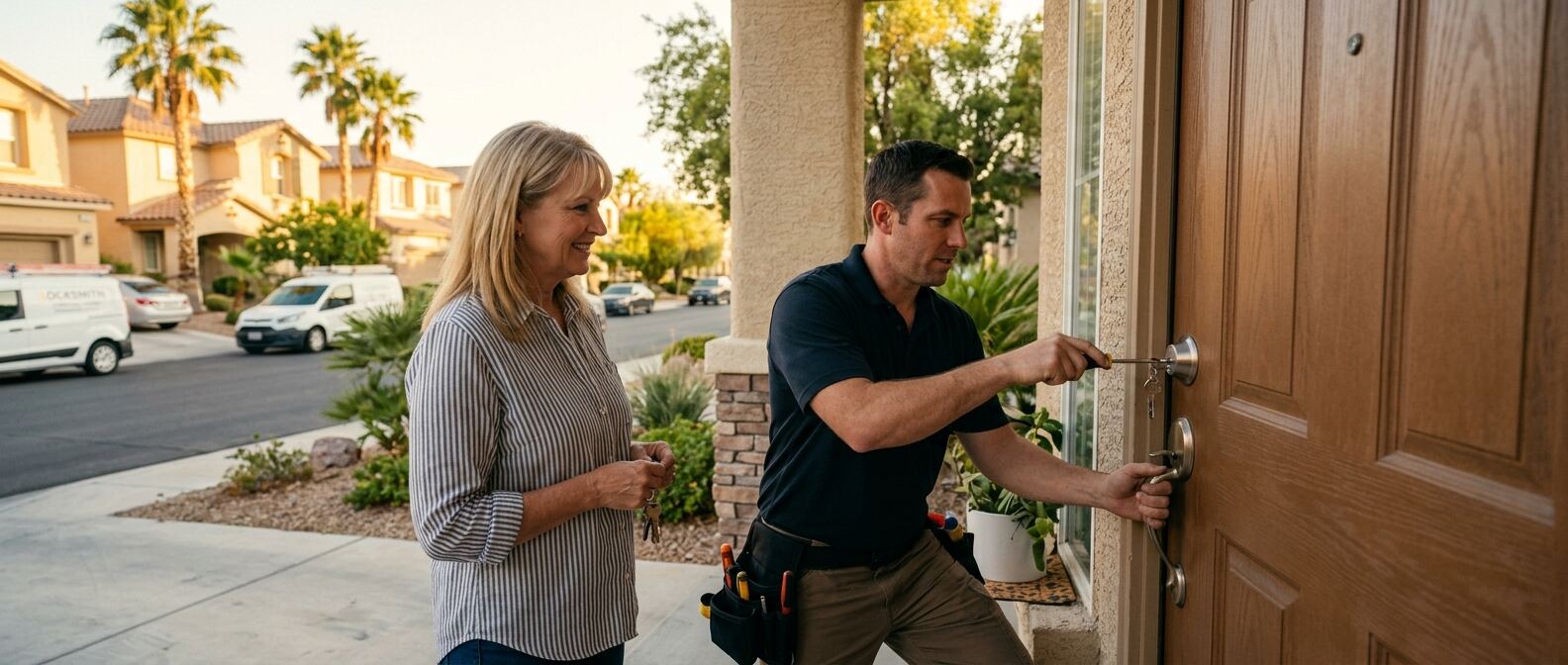
Short answer: Lockout scams follow a predictable script: a rock-bottom phone quote, a pile of surprise charges at your door, and pressure to pay cash. Here's how to see it coming and shut it down.
Lockout scams follow a predictable script: a rock-bottom phone quote, a pile of surprise charges at your door, and pressure to pay cash. Here's how to see it coming and shut it down.
The classic scam starts with a suspiciously low phone quote — a headline price meant only to win the call. Once the technician arrives, the story changes: your lock is suddenly a 'special' or 'high-security' cylinder, there are add-on fees for the service call, mileage, time of day, and 'labor,' and the friendly number you were quoted balloons into hundreds of dollars. A favorite move is to insist your lock must be drilled out and replaced when a skilled locksmith could have picked or bypassed it — drilling destroys the lock so they can sell you a new one at a marked-up price. If someone reaches for a drill within seconds of arriving at a standard residential lock, treat it as a warning sign, not expertise.
You can spot a lot before anyone touches your door. Watch for an unmarked vehicle with no company name, a technician who can't or won't show identification or a business license, and a refusal to put an itemized total in writing before starting. Another tell is the phone experience itself: many scam operations are out-of-area call centers using a generic 'locksmith' greeting rather than a real local business name, and they dispatch whichever unvetted subcontractor is nearest. A legitimate local locksmith answers with their actual company name, will tell you a realistic price range on the phone, and shows up in a marked vehicle. If the person at your door dodges basic questions about who they work for, you're within your rights to stop and call someone else.
A few habits defeat almost all of these scams. Before anyone drives out, ask for the total out-the-door price — including the service call and any minimums — and ask them to text or email it so it's in writing. Ask for the company's license and business name and confirm they match the vehicle and the invoice. Favor paying by card rather than cash, since card payments give you a paper trail and a way to dispute fraudulent charges, whereas cash-only demands exist precisely to avoid accountability. And keep in mind that a real locksmith should be asking you to prove the home or car is yours before they open it — if they're not, that's its own red flag.
The classic scam starts with a suspiciously low phone quote — a headline price meant only to win the call. Once the technician arrives, the story changes: your lock is suddenly a 'special' or 'high-security' cylinder, there are add-on fees for the service call, mileage, time of day, and 'labor,' and the friendly number you were quoted balloons into hundreds of dollars. A favorite move is to insist your lock must be drilled out and replaced when a skilled locksmith could have picked or bypassed it — drilling destroys the lock so they can sell you a new one at a marked-up price. If someone reaches for a drill within seconds of arriving at a standard residential lock, treat it as a warning sign, not expertise.
You can spot a lot before anyone touches your door. Watch for an unmarked vehicle with no company name, a technician who can't or won't show identification or a business license, and a refusal to put an itemized total in writing before starting. Another tell is the phone experience itself: many scam operations are out-of-area call centers using a generic 'locksmith' greeting rather than a real local business name, and they dispatch whichever unvetted subcontractor is nearest. A legitimate local locksmith answers with their actual company name, will tell you a realistic price range on the phone, and shows up in a marked vehicle. If the person at your door dodges basic questions about who they work for, you're within your rights to stop and call someone else.
A few habits defeat almost all of these scams. Before anyone drives out, ask for the total out-the-door price — including the service call and any minimums — and ask them to text or email it so it's in writing. Ask for the company's license and business name and confirm they match the vehicle and the invoice. Favor paying by card rather than cash, since card payments give you a paper trail and a way to dispute fraudulent charges, whereas cash-only demands exist precisely to avoid accountability. And keep in mind that a real locksmith should be asking you to prove the home or car is yours before they open it — if they're not, that's its own red flag.
Send a request through the site with your location and what you need, and you will get a straight answer and an honest estimate before any work begins.
Request service — tell us what you need and we will reply with a straight answer and an honest estimate.